In most cases, no. Electronics and e-waste such as televisions, computers, printers, laptops, cell phones, and other electronic devices are not allowed in standard rental dumpsters. These items often contain hazardous materials, batteries, and recyclable components that require specialized disposal and recycling methods.
If you’re cleaning out a garage, renovating a home, or clearing an office, you may be tempted to toss old electronics into your dumpster along with other debris. However, most dumpster rental companies prohibit electronic waste because improper disposal can harm the environment and may violate local waste management regulations.
Understanding what qualifies as e-waste, why electronics are restricted, and how to dispose of them properly can help you avoid additional fees, prevent project delays, and ensure your cleanup remains compliant with local disposal requirements. In this guide, we’ll explain which electronics are typically prohibited, what happens if e-waste ends up in a dumpster, and the best ways to dispose of electronic devices responsibly.
What Is E-Waste?
Electronic waste, commonly called e-waste, includes discarded electronic devices and equipment that contain circuits, batteries, or electrical components. Many people only think about computers and televisions, but the category extends much further.
Items considered e-waste often include:
- Desktop computers and laptops
- TVs and computer monitors
- Printers and fax machines
- Mobile phones and tablets
- Gaming consoles
- Routers and modems
- Cables, chargers, and wires
- Smart home devices
- Small kitchen electronics
Even damaged or outdated devices still count as e-waste. Whether the item works or not does not change how disposal companies classify it.
Why Electronics Usually Cannot Go in a Dumpster
Most rental dumpsters handle construction debris, household junk, yard waste, and non-hazardous materials. Electronics fall into a different category because they contain materials that require controlled disposal and recycling.
Inside many electronic devices, you will find substances like lead, mercury, cadmium, and lithium. These materials can create environmental hazards if they enter landfills. Old televisions and computer monitors especially contain components that waste facilities cannot process alongside regular debris.
When electronics end up in landfills, toxic materials may leak into soil and groundwater over time. Because of these risks, many states and local governments regulate how electronic waste gets collected and recycled.
Dumpster rental providers must follow these regulations carefully. If prohibited materials appear inside a dumpster, the disposal company may reject the load or charge additional fees for sorting and removal.
Also Read: What Sizes of Dumpsters Are Available for Rent in Fort Myers?
What Electronics Are Usually Prohibited in a Rental Dumpster?
Most dumpster rental companies prohibit electronic devices because they contain hazardous materials, batteries, circuit boards, or components that require specialized recycling. While rules may vary by location, the following items are generally not allowed in standard rental dumpsters.
| Electronic Item | Typically Allowed in a Dumpster? | Why It Is Restricted |
|---|---|---|
| Televisions (CRT, LCD, LED, Plasma) | No | May contain lead, mercury, and other materials that require special disposal. |
| Computer Monitors | No | Often contain hazardous components and recyclable materials. |
| Desktop Computers | No | Contain circuit boards, metals, and electronic components that should be recycled. |
| Laptops | No | Include batteries and electronic parts that require proper e-waste handling. |
| Printers and Fax Machines | No | Contain toner cartridges, wiring, and electronic components. |
| Cell Phones and Smartphones | No | Include lithium-ion batteries and valuable recyclable materials. |
| Tablets and E-Readers | No | Classified as electronic waste due to internal batteries and circuitry. |
| Gaming Consoles | No | Contain circuit boards, wiring, and other electronic components. |
| Routers and Modems | No | Must be processed through electronic recycling programs. |
| Keyboards and Computer Mice | Usually No | Although small, they are considered electronic waste in many areas. |
| Cables, Chargers, and Power Adapters | Usually No | Contain wiring and materials suitable for recycling. |
| DVD Players and Blu-ray Players | No | Include electronic circuitry that requires specialized disposal. |
| Stereo Systems and Speakers | No | Often contain electronic components and wiring. |
| Smart Home Devices | No | Devices such as smart thermostats, cameras, and doorbells qualify as e-waste. |
| Microwaves | Usually No | Contain electrical components and may require special handling. |
| Coffee Makers and Small Kitchen Appliances | Depends on Local Rules | Many contain electronic controls and wiring. |
| Vacuum Cleaners | Depends on Local Rules | May contain motors and electronic parts requiring separate disposal. |
| Air Conditioners | No | Often contain refrigerants and regulated materials. |
| Batteries (All Types) | No | Can leak chemicals, create fire risks, and require specialized recycling. |
| UPS Units and Surge Protectors | No | Contain batteries and electrical components. |
Electronics That Often Require Extra Attention
Some items are especially regulated because they contain hazardous substances or pose environmental risks:
- CRT televisions and monitors due to leaded glass
- Lithium-ion batteries because of fire hazards
- Air conditioners and dehumidifiers because they may contain refrigerants
- Printers with toner cartridges due to chemical disposal requirements
- Old computers and hard drives because of potential data security concerns
Before placing any electronic item in a dumpster, always check with your dumpster rental provider. Disposal regulations can vary by state, county, and landfill facility, and a quick verification can help you avoid additional fees or rejected loads.
The Environmental Impact of Improper E-Waste Disposal
Electronic waste continues to grow every year as technology changes faster than ever. People replace phones, laptops, and entertainment systems regularly, which creates massive amounts of discarded devices worldwide.
Improper disposal adds pressure to already crowded landfills and increases pollution risks. Many electronics contain recyclable metals such as copper, aluminum, silver, and gold. Recycling facilities can recover these materials and reuse them in manufacturing. When electronics go directly into landfills, those valuable resources disappear as waste.
Responsible recycling also reduces the need for raw material extraction. Mining and manufacturing place heavy demands on natural resources, so recovering reusable materials from old electronics helps reduce environmental strain.
Even small actions during a cleanup project can make a meaningful difference. Separating electronic waste from general trash supports safer disposal systems and better recycling practices.
Common Electronics People Try to Throw Away
Dumpster rental companies frequently encounter electronics mixed with general debris during home and commercial cleanouts. Some items appear harmless because they look small or outdated, but they still fall under e-waste restrictions.
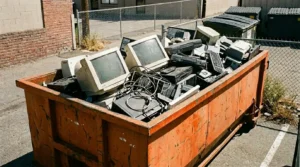
Old televisions remain one of the most common problems. Large tube TVs and older flat screens contain components that require special recycling methods. Computer monitors create similar concerns.
Office cleanouts also generate significant electronic waste. Printers, scanners, keyboards, routers, and outdated networking equipment often accumulate during renovations or business relocations.
Household cleanups create another challenge. Many homeowners toss small electronics into trash bags without realizing they require separate disposal. Broken microwaves, coffee makers, vacuum cleaners, and smart devices still count as electronic waste because they contain electrical components.
What Happens If You Put Electronics in a Rental Dumpster?
Throwing electronics into a rental dumpster can create several problems during the disposal process.
The first issue usually involves extra charges. Waste management facilities inspect dumpster contents before disposal. If workers find prohibited electronics inside the load, the rental company may apply contamination or sorting fees.
In some situations, the landfill may reject the entire dumpster load. This delay can disrupt your project schedule and increase disposal costs. Contractors and homeowners often face unexpected expenses when they need to remove prohibited items after pickup.
Improper disposal may also violate local waste regulations. Many cities and counties enforce specific electronic recycling laws. Failing to follow these rules can lead to penalties depending on local regulations.
Beyond the financial risks, incorrect disposal contributes to environmental harm. Toxic materials from electronics can remain in landfills for years, creating long-term contamination concerns.
Can Any Electronics Go Into a Dumpster?
Rules vary depending on location and dumpster provider, but most companies restrict nearly all electronic devices. Some providers may allow certain appliances after removing hazardous components, while others maintain strict no-electronics policies across the board.
Because regulations differ between areas, you should always confirm accepted materials before renting a dumpster. Reading the rental agreement carefully helps you understand prohibited items and avoid misunderstandings during pickup.
If you are unsure about a specific item, ask the dumpster rental company directly before disposal. A quick conversation can save time, money, and unnecessary complications later.
How to Dispose of E-Waste Properly
If you cannot place electronics in a rental dumpster, there are several safe and responsible ways to dispose of them. Proper e-waste disposal helps protect the environment, keeps hazardous materials out of landfills, and ensures compliance with local regulations.
Certified E-Waste Recycling Centers
Many recycling facilities specialize in handling electronic waste. These centers safely process items such as computers, televisions, printers, phones, and other electronic devices while recovering valuable materials for reuse.
Retailer Take-Back Programs
Some electronics retailers offer recycling programs for old devices. You may be able to drop off items such as laptops, tablets, cables, and small electronics for proper recycling.
Local Government Collection Events
Many counties and municipalities host electronic waste collection days where residents can safely dispose of unwanted electronics at designated locations.
Manufacturer Recycling Programs
Several electronics manufacturers offer mail-in or drop-off recycling programs for their products, making it easy to dispose of outdated devices responsibly.
Donate Working Electronics
If your electronics still function, consider donating them to schools, charities, community organizations, or nonprofit groups that can put them to good use.
Florida E-Waste Disposal Regulations: What You Should Know
Florida does not currently have a statewide law banning electronic waste from landfills. However, many local governments, counties, municipalities, and waste facilities have their own rules regarding e-waste disposal and recycling.
Because disposal requirements can vary throughout Florida, items such as televisions, computer monitors, batteries, and other electronics may be restricted at certain disposal facilities. Many Florida counties encourage residents and businesses to use designated e-waste recycling programs instead of sending electronics to landfills.
Before placing any electronic item in a rental dumpster, it is important to:
- Check local county and municipal disposal regulations
- Review your dumpster rental agreement carefully
- Contact your dumpster rental provider about prohibited items
- Verify whether your local landfill accepts electronic waste
Taking a few minutes to confirm local requirements can help you avoid extra fees, rejected loads, and unnecessary project delays.
Final Thoughts
Electronics and e-waste require more attention than ordinary junk during a cleanup project. While rental dumpsters offer an excellent solution for household debris, renovation waste, and construction materials, they usually do not accept televisions, computers, printers, or other electronic devices.
Improper disposal creates environmental risks, increases landfill waste, and may lead to additional fees or legal issues. Separating electronics from general trash helps protect the environment while keeping your project organized and compliant with local regulations.
Whether you manage a home cleanout, office renovation, or large construction project, responsible e-waste disposal should remain part of your cleanup plan from the start.
Read More: Roll-Off Dumpsters vs Front-Load Dumpsters: What’s the Difference?
Frequently Asked Questions
Can you put electronics in a rental dumpster?
In most cases, no. Dumpster rental companies typically prohibit electronics such as TVs, computers, printers, and phones because they require specialized recycling and disposal.
What happens if I throw e-waste in a dumpster?
You may face additional disposal fees, rejected dumpster loads, or delays in pickup. Improper disposal can also violate local waste management regulations.
Are TVs considered electronic waste?
Yes. Televisions are one of the most common forms of e-waste and usually require recycling due to the materials and components they contain.
Can I throw away a computer in a rental dumpster?
Most dumpster rental providers do not allow computers in standard dumpsters. Computers should be taken to an approved e-waste recycling facility for proper disposal.
Where can I dispose of old electronics in Florida?
You can dispose of electronics through certified e-waste recycling centers, county collection programs, retailer take-back initiatives, and manufacturer recycling programs available throughout Florida.
Choose 98 Dumpster Rental for Proper Waste Disposal
When you need dependable dumpster rental service, 98 Dumpster Rentals helps you handle waste removal the right way. Our team provides clear guidance on accepted materials, restricted items, and efficient disposal practices so your project stays on track without unnecessary delays.
We understand that every cleanup project comes with different challenges, which is why we focus on simple scheduling, transparent service, and reliable support from start to finish. Whether you need a dumpster for a residential cleanout, commercial renovation, or construction job, we make the process straightforward and stress-free.
With 98 Dumpster Rentals, you get more than a dumpster. You get a team that helps you manage waste responsibly and efficiently every step of the way.